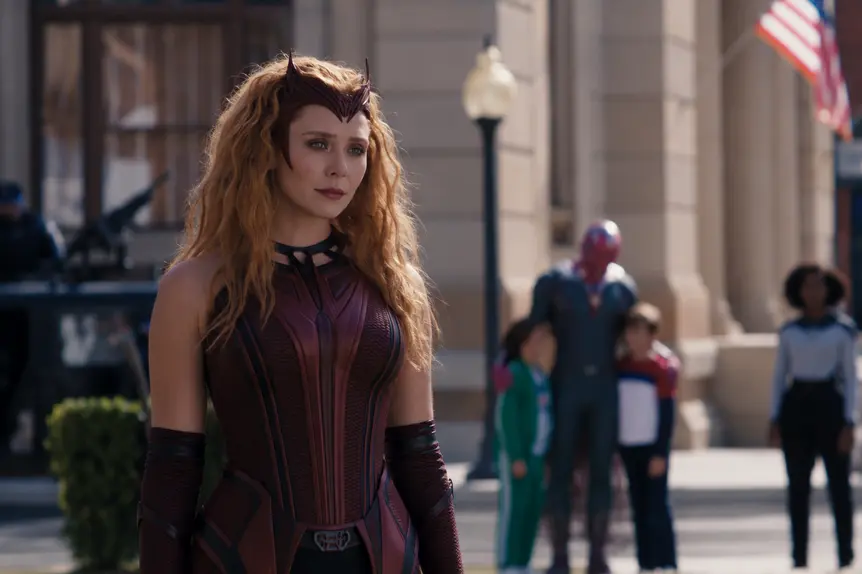
VisionQuest Proved That Wanda Maximoff Is an Anchor of the MCU
Strap in, Marvel fans! Something wild happened when VisionQuest rolled its credits. This Disney+ marvel, helmed by the great Terry Matalas (yes, that Terry from Star Trek: Picard), presented us with a thrill ride featuring Vision (the always charming Paul Bettany) and the nutty robot mastermind Ultron (James Spader). The duo goes on a quest of identity while chatting about what it means to truly exist. With some sizzling chemistry and a handful of impressive set pieces, it even outshone its predecessor, WandaVision. But guess what seized all the chatter as soon as that surprise post-credits scene hit? Yep, it was none other than our beloved Wanda.
In an exit interview that felt like a game of Marvel telephone, Paul Bettany sounded like he saw this coming a mile away. When asked about the possibility of Elizabeth Olsen’s legendary return in the series, our dear Paul said he gave Kevin Feige the side-eye on that idea. “I really don’t think you should distract from [Vision] by giving the audience that at the end of the [show],” he explained. And honestly, he was spot on! It’s not that VisionQuest turned into WandaVision; it’s that Wanda stole all the spotlight! That’s right, folks, Wanda Maximoff is basically the anchor of the entire MCU.
A Look Back at Wanda Maximoff
If you think about it, Wanda’s current fame is a bit of a shocker. The Scarlet Witch made her debut way back in 1964’s X-Men #4, thanks to the dynamic duo of Jack Kirby and Stan Lee. She stepped onto the scene with her twin brother Quicksilver as a part of the Brotherhood of Evil Mutants. Like many ladies of the Silver Age, her powers leaned toward the “defensive” side—casting hexes that gave unlucky vibes to whoever crossed her. Fast forward a year, and she and Quicksilver joined the Avengers, recruited by Captain America to join the quirky crew named “Cap’s Kooky Quartet.”
Throughout her adventures in Avengers and the West Coast Avengers, Wanda became more known for her drama and relationship tangled webs than her actual powers. Dating Hawkeye? Check. Flings with Vision and Wonder Man? Double check. Sure, she learned a few tricks from the ancient Agatha Harkness, but even her power upgrades often revolved around her relationships, mainly when she created her twins Tommy and Billy with Vision. Yikes! Talk about a wild family tree! And let’s not even dive into how often Marvel cooked up “Wanda goes crazy” storylines where she obliterated half the team.
The MCU’s Rollercoaster Ride with Wanda
Now, the MCU tried to treat Wanda a bit better, though by “better,” we really mean “still kinda not great.” After a tantalizing post-credits tease in Captain America: The Winter Soldier, she and her twin Pietro (the very much missed Aaron Taylor-Johnson) made their entry in Avengers: Age of Ultron. But honestly, Wanda spent most of her time giving everyone nightmares, which is not exactly how to make an entrance. Then she barely held on to her spotlight in Captain America: Civil War, screwing up big time and being told to sit on the sidelines. And even in Avengers: Infinity War, where she finally got some juicy dramatic scenes, she still felt more like ‘Vision’s girlfriend’ than the Scarlet Witch.
WandaVision Changes Everything
Then came WandaVision, and like a phoenix rising from the ashes, everything shifted for her character! It wasn’t just the playful vibe of the show or Elizabeth Olsen’s impressive acting chops that lit up Wanda’s character. It was the brilliant twist on the superhero trope, the tragic reality that despite her powerful abilities—turning an entire town into actors for her sitcom or conjuring adorable twins out of thin air—she couldn’t escape her heartbreaking losses. As she faced the ghosts of her past—losing her family, her brother, and her dear Vision—her true struggle became painfully relatable.
Even when Doctor Strange in the Multiverse of Madness flipped the switch and turned Wanda into the villain, that relatable core remained. While characters like Tony Stark and Steve Rogers fell from grace for their own reasons, Wanda became the shining beacon of complexity within the MCU. She resonated deeply with audiences in WandaVision and tugged at heartstrings when she bid adieu. With her resurrection for Doomsday, Marvel better hope that she resonates with fans once again, because if the MCU wants to hold onto its crown as the pop culture king, it’s gotta keep darling anchors like Wanda Maximoff afloat.