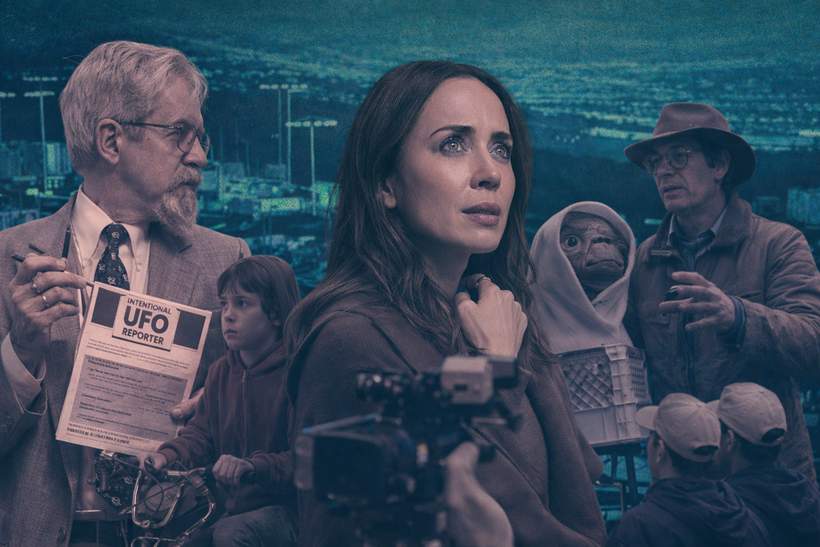
The Quirky Origins of UFOs and Spielberg
Imagine a world where the extraordinary power of UFOs is stirred by one man’s wild ride through the cosmos of science and skepticism. Enter J. Allen Hynek, an astronomer who was more than just a math whiz—instead, he turned out to be the unwitting father of Spielberg’s alien obsession, which birthed timeless classics like
Close Encounters of the Third Kind and
E.T. the Extra-Terrestrial. Surprised? Well, hold your alien horses!
The Professor Who Saw Squiggly Lights
Long before Spielberg had his first UFO sighting (thanks, Dad!), Hynek was neck-deep in starry-eyed investigations on behalf of Uncle Sam, sifting through strange sightings since 1948—just a year after the phrase “flying saucer” was tossed around like a hot potato. Let’s rewind: Hynek was a science instructor at Ohio State University when the Air Force came knocking, like an overly curious neighbor with a UFO conspiracy theory.
From Skeptic to Believer
Initially, Hynek was a UFO cynic, laughing in the face of extraterrestrial claims. However, a few jaw-dropping encounters with the public turned his skepticism upside down. Dan Harary, a friend of the family, says, “He was like, ‘UFOs? Pfft.’ But then he started listening closely and realized, oops, these folks weren’t just seeing things!”
Project Sign: The Real-Life X-Files
The Air Force had this grand plan called Project Sign, aiming for scientific rigor in explaining sightings. But spoiler alert: instead of asking, “What’s that?” they were more like, “It’s nothing!” Hynek’s life was now a comically intense spin of debunking UFOs faster than a speeding bullet.
It’s Not Swamp Gas, Buddy!
So there he was, tangled in a web of bizarre explanations. Hynek had to dismiss a high-profile sighting as swamp gas, leading to a ton of roasting from the public—talk about an awkward dinner conversation! When it came to more serious reports from military pilots, he could no longer ignore the compelling evidence. Little by little, he realized that his goal of debunking was colliding with something much grander—and perhaps spookier.
The Birth of CUFOS
Fast forward to 1972, when Hynek wrote
The UFO Experience: A Scientific Inquiry. He was officially done with Air Force drudgery and launched the Center for UFO Studies: a haven for anyone wanting to report sightings without being laughed at. He became a media darling, gracing TV shows and chatting with the curious masses.
Fiction Meets Reality
Meanwhile, the wheels were turning behind the scenes in Hollywood, with Spielberg concocting a film about UFOs. Talk about cosmic timing! Hynek even had his cameo as a pipe-smoking scientist in
Close Encounters—because who doesn’t love an alien enthusiast rocking a pipe?
From Horror Show to Family Flick
Originally, the film had a darker tone inspired by stories like the infamous Kelly-Hopkinsville incident, where locals armed with shotguns faced down supposed extraterrestrial menace. As Spielberg’s vision shifted, so did the story, transforming it from a heart-pounding horror flick to a heartwarming family classic, culminating in the beloved icon E.T.
The Legacy Lives On
Today, as we bask in the glow of Hynek’s contributions to
UFO research and cinema, let’s not forget the curious intersection of science and mystery he carved out. The work continues through exciting modern projects aiming to blend storytelling with factual investigations into extraterrestrial encounters. So, the next time you gaze up at the night sky, remember—it’s not just space; it’s the canvas of our wildest dreams and tales yet to unfold!
Conclusion: What Would Hynek Think?
Hynek’s legacy as a scientific trailblazer in ufology assures us that there’s always room for imagination and inquiry—whether or not you believe in little green men. Buckle up, fellow dreamers; the cosmos is calling!