From SNL to SCTV: The Legacy of Sketch Comedy Rivalry
Ah, Saturday Night Live—America’s late-night comedy juggernaut! Since 1975, it’s been blasting out belly laughs and launching a parade of comedy legends, all while hosting a star-studded lineup that would make even the sun jealous. But wait, there’s more! The new documentary, SCTV: The Greatest Show You’ve Never Heard Of, takes us on a hilarious detour, reminding us of the fierce competition that SNL inspired.
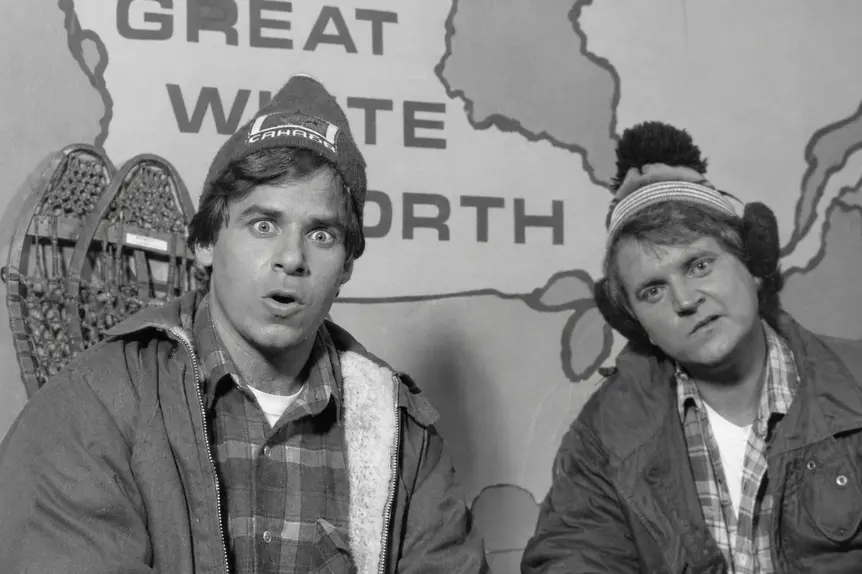
Born in the fiery comedy crucible of 1975, SNL came out swinging with some heavy hitters from Second City Toronto, namely Dan Aykroyd and Gilda Radner. Enter Second City Television—or SCTV for those who like to keep it snappy—which launched just a year later, giving Toronto’s comedy geniuses another stage to shine, away from the star-studded, celebrity-filled circus that SNL thrived on.
The Great Divide: SNL vs. SCTV
SNL rolled out the red carpet with its “live from New York” magic, inviting celebrity hosts, musical guests, and just a touch of chaos each week. In contrast, SCTV was your quirky friend who loved indie films and wore glasses: recorded in Toronto, lacking the Hollywood glitz, focusing solely on good ol’ humor and poking fun at cheesy pop culture clichés with interconnected sketches.
Sweet Rejection: When SNL Met SCTV
Even though SCTV started as a comedy lifeboat to keep talent in Canada, Lorne Michaels, SNL’s big cheese, eyed the SCTV lineup for potential cast members. One infamous audition session with SCTV stars John Candy, Joe Flaherty, and Dave Thomas turned into a cringe-worthy disaster. If the awkward silence could talk, it’d probably say, “Yikes!” As Thomas reflects in the documentary, after that performance, Michaels sat in silence like a deer in headlights, giving an ominous vibe that made Candy joke about Lorne having throat issues. It’s a rejection that apparently stung like an angry bee, as shared by SCTV co-creator Andrew Alexander.
The Next Generation: New Faces, New Influences
Flash forward to season 11 of SNL, where Michaels decided to bring in some fresh meat: the Kids in the Hall. Bruce McCulloch and Mark McKinney dipped their toes in as writers, but it wasn’t quite a match made in comedy heaven. However, Michaels went on to produce the entire sketch series of The Kids in the Hall, which embraced a bold and dark humor, standing in stark contrast to SNL’s vibe.
Even when it wasn’t a ratings golden child, The Kids in the Hall carved a dedicated fanbase in the early ’90s and continued to inspire future generations.
Competition Heats Up: The ‘90s Comedy Wars
The ’90s, full of controversy and comedic rivalries, was a rocky period for SNL. Think Andrew Dice Clay boycotts and the infamous Sinead O’Connor pope photo incident. Cast members like Adam Sandler and Chris Farley were ousted due to network pressures, while newcomers like Janeane Garofalo, Sarah Silverman, and Chris Rock struggled to fit the mold.
It was also a time when many fresh contenders were looking to steal the comedy crown. Enter The Ben Stiller Show: with its penchant for obscure pop references, it had more stylistic connections to SCTV than SNL. Stiller’s rebellious departure after only four episodes was a sign of smoothing the rough edges out of sketch comedy. Meanwhile, writer Bob Odenkirk’s time on SNL paved the way for his further success with Mr. Show, a sketch series featuring comedic heavyweights like Scott Aukerman and Jack Black—often hailed as one of the best sketch shows ever.
Add to the mix The State, where David Wain and Michael Showalter’s subversive genius took sketch comedy to unexpected territories, capturing the young and hip audience without falling into the mainstream trap.
Comic Renaissance: In Living Color and Mad TV
As cable began embracing bold sketches, In Living Color made quite the entrance in 1990, thanks to Keenen Ivory Wayans. This show shook up the norm by expanding the storytelling landscape with a diverse cast that included Wayans, Jim Carrey, and a plethora of talented women and people of color. It offered a blend of sharply crafted comedy that routinely outshone SNL, particularly amongst younger audiences. Can’t say SNL wasn’t sweating a little!
Despite In Living Color capturing attention, Mad TV waltzed in halfway through the ’90s, taking SNL’s Saturday night slot. While it birthed stars like Keegan-Michael Key and Jordan Peele, Mad TV never quite rose to the same comedic caliber as its elder cousins but lasted a whopping 14 seasons nonetheless.
Provocative Pioneers: Chappelle and Beyond
If anyone rivaled SNL’s edgy comedy from its glory days, it was Chappelle’s Show, which snowballed into a cultural phenomenon. With sketches like Clayton Bigsby and The Player Haters’ Ball, it captured audiences and left a mark stronger than many shows before it, many times without the safety net of social media buzz.
Then there’s Tim Robinson’s wild ride in I Think You Should Leave, which embraces strange awkwardness and brings comedic awkwardness back into mainstream culture. With a distribution model that sidesteps traditional routes, it showcases how niche comedy can flourish in the current landscape.
Thanks for the Laughs, SNL
We’ve got to hand it to SNL in the end. Sure, its days of reign are countered by some stiff competition and criticisms, but it remains an industry cornerstone. Much like how David Letterman’s Late Night emerged as a bold statement against Johnny Carson’s monotony, none of these shows would have existed without SNL to push against. It’s a testament to SNL’s lasting impact that has shaped the dynamic landscape of comedy for decades.
You can catch SCTV: The Greatest Show You’ve Never Heard Of streaming on Netflix right now, and you just might find yourself rolling on the floor with laughter—or at least chuckling politely.